Data Center Technician Job Description: A Template With Duties by Level and a Skills Matrix
A copyable data center technician job description, typical duties for Tech I, II, and III, a skills matrix across IT, critical facilities, and safety, and how to check each skill when you hire.
 By Shreshth Saride, Co-founder and CEO14 min read

TL;DR
- A data center technician job description should name the type of site, the equipment the technician works on, and the procedures they must follow, not only a list of IT tasks.
- Split duties by level. A Tech I works standard tasks under supervision, a Tech II works most tasks alone, and a Tech III handles escalations and helps write procedures.
- Group skills into IT and network, critical facilities, and safety and procedure, and say for each one whether it is required on day one or taught after the hire.
- Write the physical requirements, shift pattern, and on-call rules plainly. Under the ADA rules, a written job description prepared before you advertise is evidence of the job's essential functions.
- Check each required skill in hiring with an interview question or a practical exercise. Simulation exercises support interviews; they do not predict job performance on their own.
What does a data center technician do?
A data center technician installs, maintains, and repairs the physical equipment in a data center: servers, network gear, cabling, and, at many sites, the power and cooling systems that support them. Most of the work follows tickets, maintenance schedules, and written procedures, and every change is recorded.
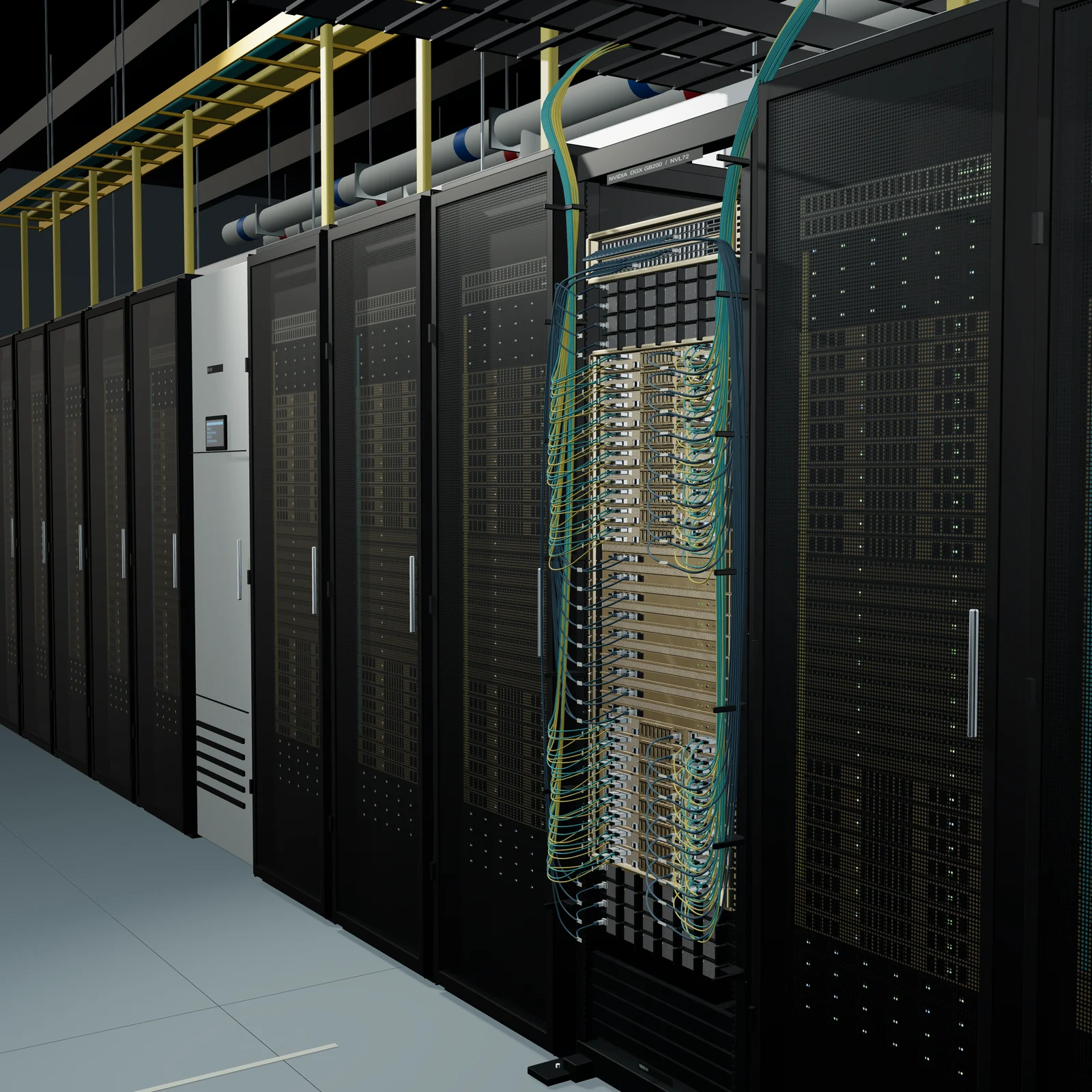
The title covers two different jobs. An IT data center technician works on the white space: rack and stack, hardware swaps, cabling, and cross-connects. A critical facilities technician works on the power chain, UPS systems, generators, and cooling. Many smaller sites and contractors combine both, so your job description has to say which version you are hiring for.
Public occupation data does not have a separate category for this role. The closest IT match in O*NET is Computer Network Support Specialists (15-1231.00), whose listed tasks include "Install or repair network cables, including fiber optic cables" and "Document network support activities." That covers part of the IT side and none of the facilities side, which is why a site-specific description matters.
Data center technician job description template
Copy the template below and replace each item in square brackets with your own details. Delete the duties that do not apply to your site, because a long list of tasks the person will never do makes the posting less clear, not more complete.
Job title and summary
Data Center Technician [I / II / III], [IT / Critical Facilities]. [Company] is hiring a data center technician at our [hyperscale / colocation / enterprise] site in [city]. You will install, maintain, and repair [servers, network equipment, and cabling / electrical and mechanical systems] in a live facility, follow written procedures for every change, and keep accurate records. You will report to the [shift lead / facilities manager].
Responsibilities
- Rack, stack, cable, and label new equipment to the approved rack elevation, and decommission equipment by the site's data-bearing device procedure.
- Diagnose and replace failed hardware such as drives, memory, power supplies, fans, and optics, and confirm the fix before you close the ticket.
- Install, test, trace, and label copper and fiber cabling, and run cross-connects to the work order.
- Do scheduled walk-throughs of data halls and equipment rooms, record readings, and report abnormal conditions.
- Respond to alarms using the site's emergency operating procedures (EOPs), and escalate with a clear description of what you found.
- [Critical facilities] Support maintenance on the power chain, including switchgear, UPS systems, PDUs, and standby generators, under written methods of procedure (MOPs).
- [Critical facilities] Monitor and support cooling systems such as CRAHs, chillers, and, where installed, coolant distribution units (CDUs).
- Follow change management for every planned change, and do not start work without an approved ticket or MOP.
- Apply lockout/tagout and electrical safety rules as you are trained and authorized.
- Keep ticket notes, logs, and asset records accurate enough that the next shift can see exactly what was done.
Requirements
- [High school diploma or equivalent / technical certificate / equivalent experience].
- [Number] years of experience in [server or network hardware / electrical or mechanical maintenance / military, field service, or trades work].
- Ability to follow written procedures exactly and to stop and escalate when the equipment does not match the document.
- Clear written communication in tickets and shift notes.
- Ability to meet the physical requirements and schedule listed below.
Preferred qualifications
- Industry certifications relevant to the role. See our review of data center training programs for the common options.
- Experience in a live data center, colocation facility, or other mission critical environment.
- [Critical facilities] Electrical safety training to NFPA 70E, and experience with UPS, generator, or chiller maintenance.
- [Critical facilities] Experience with commissioning or functional testing.
Physical requirements
- Lift and carry up to [weight] without help, and use team lifts or lifting equipment above that.
- Stand, walk, kneel, and reach for [duration], and climb ladders.
- Work in noisy areas and in hot and cold aisles while wearing the required PPE.
Schedule and on-call
- [Shift pattern, for example rotating 12-hour shifts / Monday to Friday days].
- [Nights, weekends, and holidays as scheduled].
- [On-call rotation: how often, expected response time, and whether it is paid].
- [Travel between sites, if any].
Data center technician duties by level
Data center technician duties grow with each level: a Tech I works standard tasks under supervision, a Tech II works most tasks alone, and a Tech III handles escalations and trains others. Employers name and number these levels differently, so the table below shows a typical pattern, not an industry standard.
| Area | Tech I (entry) | Tech II (mid) | Tech III (senior) |
|---|---|---|---|
| Tickets and hardware | Standard swaps and rack and stack with a checklist, reviewed by a senior | Works most ticket types alone, including harder diagnostics | Takes escalations and repeat failures, and reviews others' work |
| Cabling and network | Patches, traces, and labels to the work order | Runs cross-connects and larger cabling jobs, and tests fiber | Plans cabling for deployments and checks quality |
| Power and cooling | Does walk-throughs and records readings, and reports alarms | Supports maintenance under a MOP and answers alarms with EOPs | Leads maintenance windows and coordinates vendors |
| Procedures | Follows SOPs, MOPs, and EOPs as written | Points out errors and gaps in procedures | Writes and reviews MOPs and joins change reviews |
| Safety | Works under a trained, authorized person for LOTO | Applies LOTO on the equipment they are authorized for | Acts as the qualified person where the site allows, and coaches others |
| People | Learns the site | Shows new hires how to do routine tasks | Trains the shift, and often acts as the shift's technical lead |
Use the table to write one description per level instead of one description with a wide experience range. Candidates can then see which posting fits them, and your interviewers know what to check. For what the first 90 days look like at each level, see our data center technician onboarding plan.
Data center technician skills matrix
Data center technician skills fall into three groups: IT and network, critical facilities, and safety and procedure. For each skill, decide whether the person needs it on day one or whether you will teach it after the hire, and put only the day-one skills under Requirements.
| Group | Skill | What good looks like | Day one or taught |
|---|---|---|---|
| IT and network | Rack and stack | Mounts rails and equipment to the elevation, keeps airflow and weight in mind, and labels both ends | Day one for IT roles |
| IT and network | Structured cabling | Knows copper and fiber types and connectors, cleans and inspects fiber before connecting, and tests the link | Day one for IT roles |
| IT and network | Cross-connects | Reads the work order, finds the right panel and port, completes the run, and records it | Often taught |
| IT and network | Hardware swaps | Confirms the fault and the asset before touching anything, uses ESD protection, and verifies the fix | Day one for IT roles |
| Critical facilities | Power chain | Can trace power from utility and generator through switchgear, UPS, and PDUs to the rack on a one-line diagram | Awareness on day one, depth taught |
| Critical facilities | UPS and PDUs | Names the UPS operating modes and knows which PDU or breaker feeds a given rack | Day one for facilities roles |
| Critical facilities | Cooling | Reads supply and return temperatures, knows the cooling units on site, and recognizes an abnormal reading | Depends on the site |
| Critical facilities | Generators | Does a walk-down and confirms the controller is back in AUTO after a test | Often taught |
| Safety and procedure | Lockout/tagout | Knows the site's energy control procedure and when it applies, and never works on equipment that is not isolated | Awareness on day one, authorization taught |
| Safety and procedure | Arc flash awareness | Reads the equipment label, knows the boundaries, and wears the PPE the procedure requires | Awareness on day one, depth taught |
| Safety and procedure | MOPs, SOPs, and EOPs | Follows each step in order, checks the expected result, and stops when it does not match | Day one |
| Safety and procedure | Change management | Does not start without an approved change and records what was done | Day one in principle, site process taught |
Sites with liquid-cooled racks add another set of cooling skills, such as CDU alarms and leak response. Our liquid cooling training guide lists them. Sites under construction or expansion may also want commissioning experience; commissioning levels L1 to L5 explains what each level involves.
Safety and procedure requirements to put in the posting
Every data center technician job description should name lockout/tagout, electrical safety, and written procedures as part of the job. These are not extras for senior staff: an entry-level technician works near energized equipment and inside the change process from the first week.
Lockout/tagout
OSHA's lockout/tagout standard, 29 CFR 1910.147, "applies to the control of energy during servicing and/or maintenance of machines and equipment." It requires an energy control program with written procedures, employee training, and periodic inspections at least annually. It also distinguishes an authorized employee, who locks out or tags out equipment to service it, from an affected employee, who works on or near it. Say in the posting which one the role is.
Note the scope. The same standard says it does not cover exposure to electrical hazards from work on electrical conductors and equipment, which OSHA covers in Subpart S. For electrical work, the posting should point to electrical safety training as well as LOTO.
Arc flash and NFPA 70E
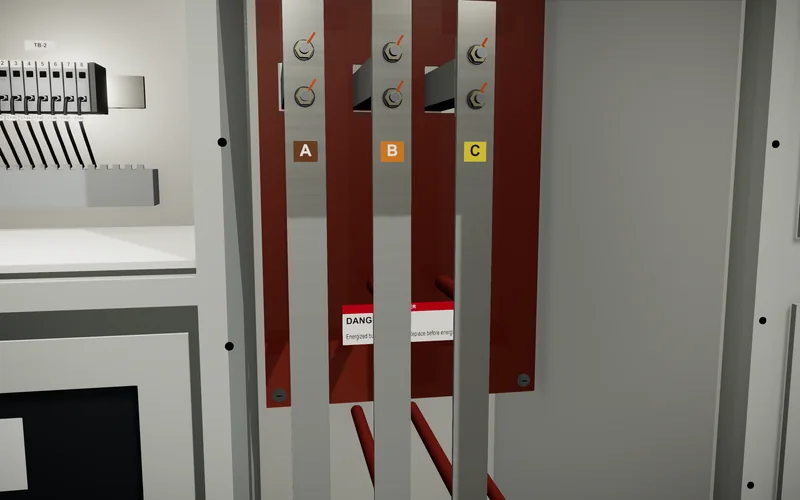
NFPA describes NFPA 70E, the Standard for Electrical Safety in the Workplace, as requirements for safe work practices that help companies and employees avoid injuries from shock, electrocution, arc flash, and arc blast, and comply with OSHA 1910 Subpart S. For an IT technician, ask for arc flash awareness: reading the label, respecting the boundaries, and wearing the right PPE. For a critical facilities technician, list 70E training as required or preferred, depending on the work.
MOPs, SOPs, EOPs, and change management
Uptime Institute's guide to writing a good method of procedure describes a MOP as a step-by-step sequence for any action that changes the state of a critical component, such as switching breakers or closing valves. An SOP is the higher-level document that controls how changes are made in normal operations, and an EOP is carried out step by step when an abnormal event triggers it. The same guide says MOPs must go through the change management system and that technicians should have practiced them before they carry them out.
How to check each skill when you hire
Check knowledge with an interview question and check procedure skills with a practical exercise. A candidate can explain LOTO well in an interview and still skip a step at the panel, so the skills that involve doing things in order need to be seen, not only described.
| Skill | Interview question | Practical exercise |
|---|---|---|
| Rack and stack | "Walk me through installing a 2U server from the box to handover." | Mount and cable a device to a given elevation and label it |
| Cabling and cross-connects | "What do you check before you connect a fiber?" | Trace a cable to the right port from a work order and record it |
| Hardware swaps | "How do you confirm you are at the right server before you pull a drive?" | Match a ticket to the asset label and replace the failed part |
| Power chain | "Which breakers feed this rack?" with a one-line diagram | Find every isolation point for a panel on a one-line diagram |
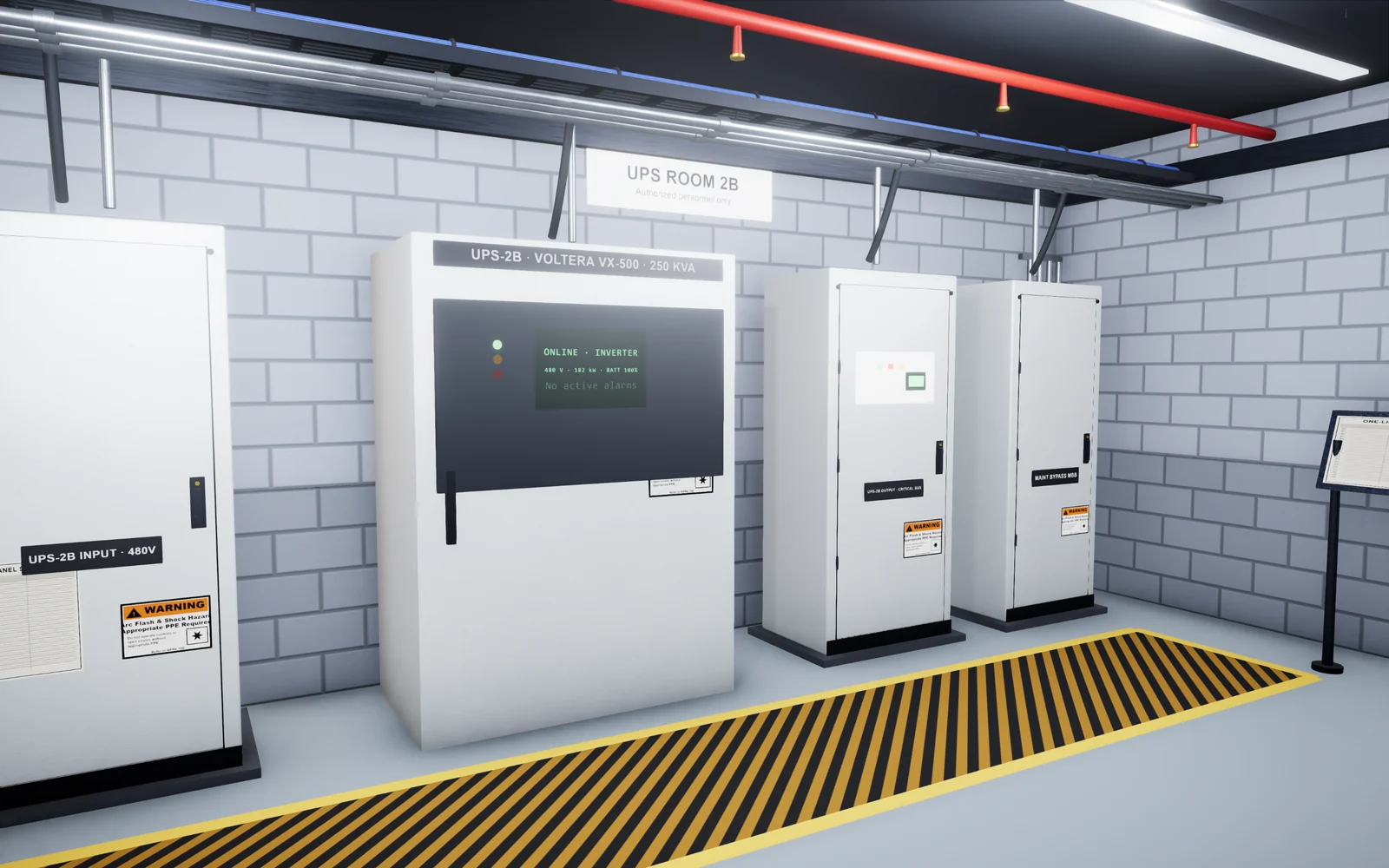
| UPS and PDUs | "What is the difference between bypass and maintenance bypass?" | Name each cabinet in a UPS lineup and state the current mode |
| Cooling | "A CRAH shows a high supply temperature. What do you do first?" | Answer a cooling alarm using the written EOP |
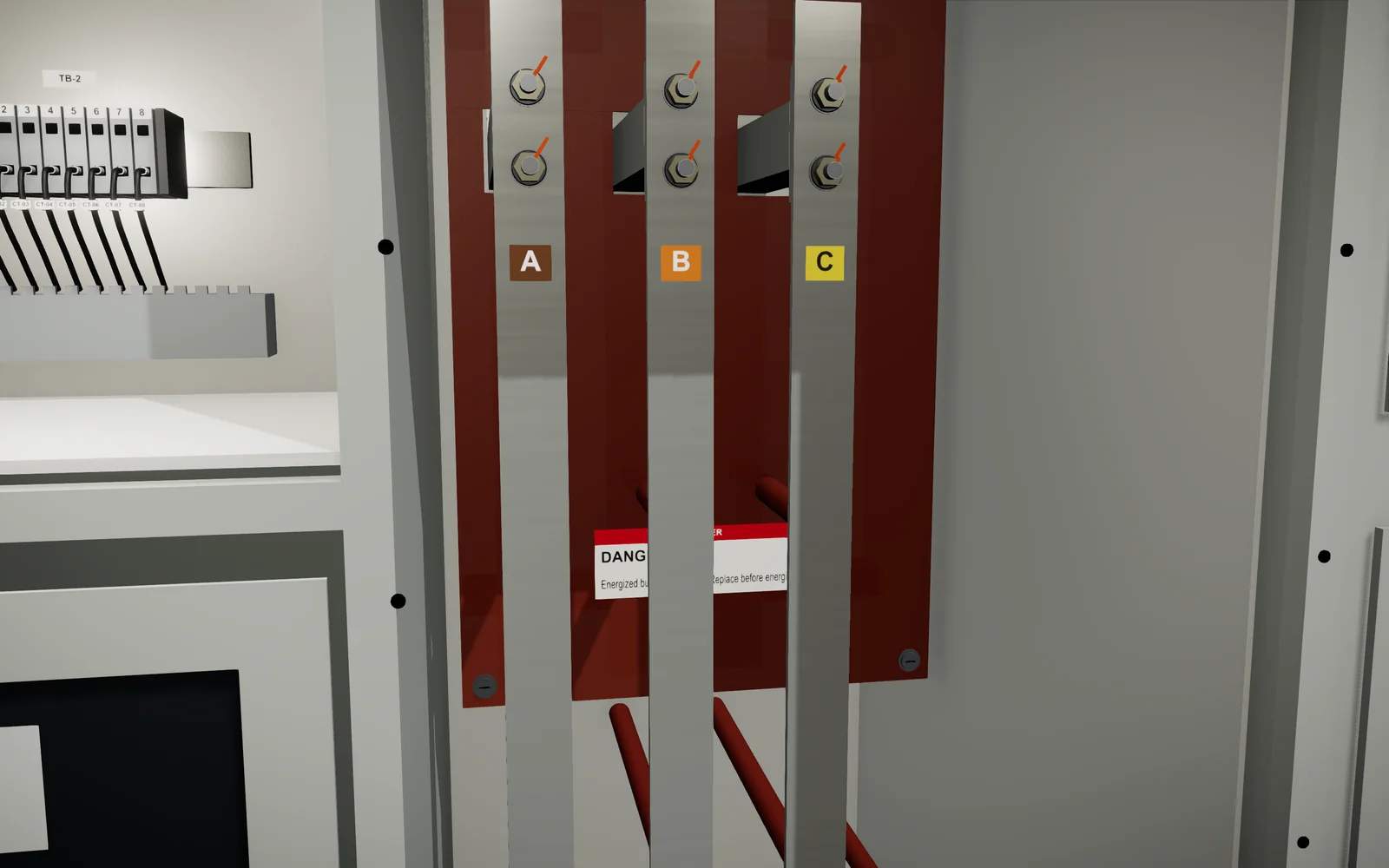
| Lockout/tagout | "When are you an authorized employee and when are you an affected employee?" | List the lockout points for a task, in order, from a drawing |
| Procedure discipline | "Tell me about a time a step did not match what you saw." | Follow a short MOP extract that contains a mismatch, and see whether the candidate stops |
| Communication | "What goes in a good shift note?" | Write a two-line ticket note at the end of the exercise |
Score every candidate with the same rubric and decide in advance which errors end the exercise. Our data center technician skills assessment guide has a sample rubric and the US legal basics for tests used in hiring.
Common mistakes in data center technician job posts
The most common mistake is a posting that does not say whether the job is IT or critical facilities. The second is a list of requirements copied from another company that does not match the work at your site.
- One posting for two jobs. Server swaps and generator maintenance need different people. Write separate descriptions, or say clearly that the role covers both.
- A requirement for every skill. If you plan to teach your switching sequence in week three, list it as taught, not required. Requiring it only narrows the pool.
- No safety or procedure language. Leaving out LOTO, electrical safety, and MOPs tells careful candidates that the site does not take them seriously.
- Hidden schedule details. Twelve-hour rotating shifts, nights, and on-call duty should be in the posting, not first mentioned in the offer call.
- Physical requirements copied from elsewhere. Base lifting limits and working conditions on your own job, and review them with your HR and legal team.
- Certificates in place of skills. A certificate shows that someone finished a course. It does not show how they work through a procedure, so say what you will check in the hiring process.
- One wide experience range. "1 to 10 years" tells nobody which level you need. Use the duties-by-level table to write one posting per level.
Where simulation exercises fit in hiring and training
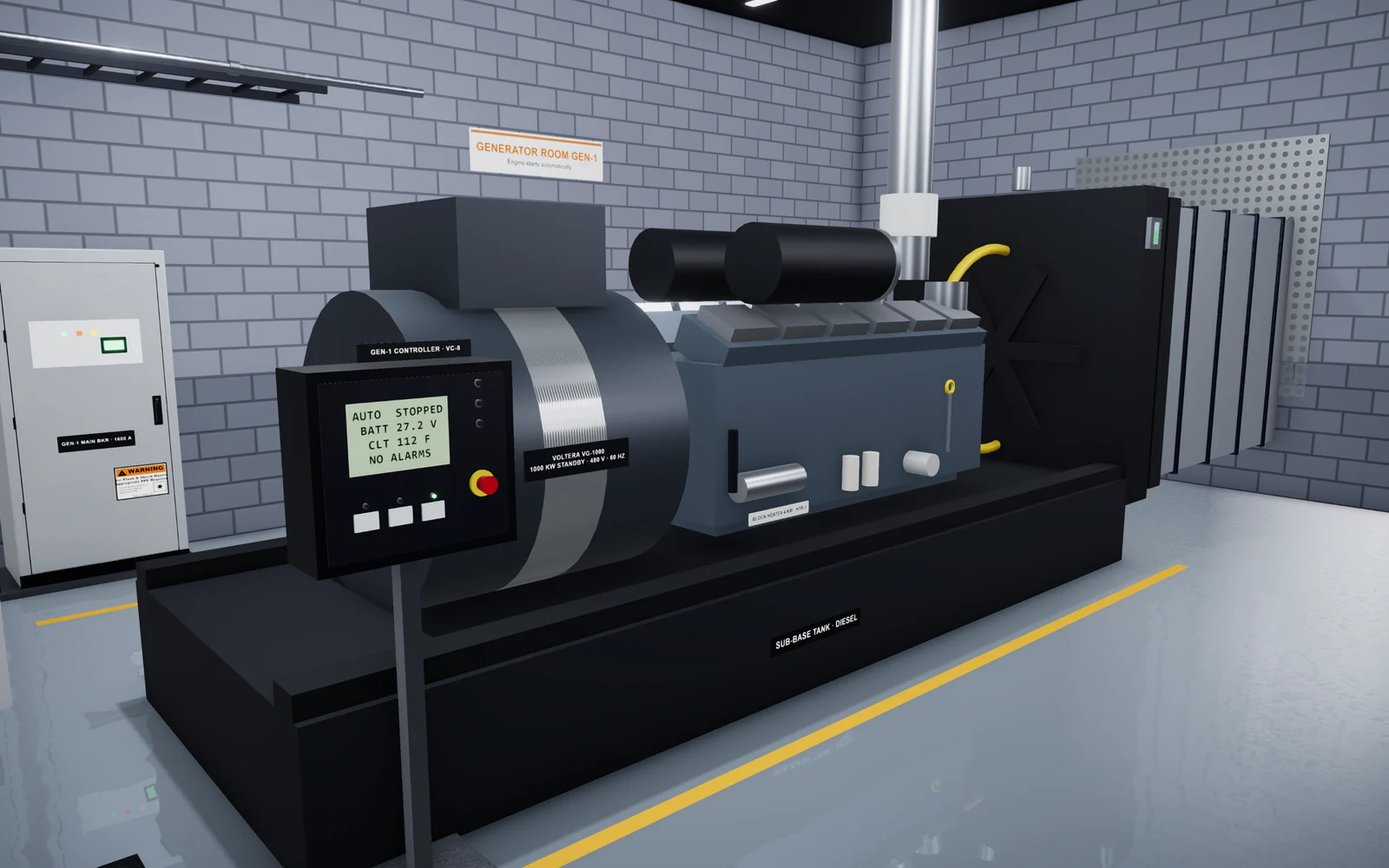
A simulation exercise lets a candidate or new hire practice a procedure on realistic equipment without touching a live system. In hiring, it gives interviewers a shared, repeatable task to discuss; it supports the interview and does not replace it.
Simulation works best for the procedure items in the skills matrix: following a MOP, answering an alarm with an EOP, finding isolation points, and stopping on a mismatch. Every candidate gets the same scenario, and faults that you cannot safely create on live equipment can be added. It does not test physical feel, such as the force needed to seat a cable or lift a server, so pair it with hands-on checks where those matter.
Do not describe the result as a validated prediction of job performance. Treat it as an observed sample of how the person worked on that day, and use it together with interviews and references. After the hire, the same scenarios become practice for the skills you marked as taught. Uptime Institute's MOP guidance says technicians should rehearse procedures through dry runs and walk-throughs before carrying them out, and a simulation is one way to do that.
Use the job description after the hire
A good job description also works as a training plan. Each skill you marked as taught becomes an item in the new hire's first 90 days, and each level in the duties table becomes a promotion step.
- Copy the taught skills into the onboarding plan with an owner and a target date.
- Choose the courses or certifications that cover them from our training programs review.
- Practice the site's MOPs and EOPs before the person carries them out. For lockout/tagout, OSHA's 1910.147 also requires retraining when job assignments, equipment, or energy control procedures change.
- Review the job description each year, and whenever equipment or procedures change, so the next posting matches the job.
How Oasis helps
Oasis Simulations builds custom 3D simulations of data center equipment and procedures that run in a web browser. We build each scenario around your equipment, your MOPs and EOPs, and your site standards, and review it with your team before anyone uses it.
Hiring teams can use these exercises to support interviews, and training teams can use them for practice after the hire. The scenes on this site are examples, not a fixed catalog. You can try a data center simulation in your browser, read about our hiring and training programs, or see how we build a program. To talk it through, book a 15-minute call.
Frequently asked questions
What are the main duties of a data center technician?
The main duties are installing and replacing hardware, cabling and cross-connects, walk-throughs and alarm response, and keeping accurate records. Critical facilities technicians also support maintenance on the power chain, UPS systems, generators, and cooling. All of this is done under written procedures and change management.
What skills should a data center technician job description list?
List skills in three groups: IT and network (rack and stack, cabling, cross-connects, hardware swaps), critical facilities (power chain, UPS, PDUs, cooling, generators), and safety and procedure (lockout/tagout, arc flash awareness, MOPs, SOPs, EOPs, and change management). Mark which ones are required on day one and which you will teach.
What is the difference between a Tech I, Tech II, and Tech III?
In a common pattern, a Tech I does standard tasks under supervision, a Tech II works most tasks alone and handles harder diagnostics, and a Tech III takes escalations, writes or reviews procedures, and trains others. Employers name and number these levels differently.
Should a data center technician job description include physical requirements?
Yes. State lifting, standing, kneeling, ladder work, noise, and PPE plainly, based on your own review of the job. Under the ADA regulations, a written job description prepared before advertising is one piece of evidence of a job's essential functions.
Can a simulation exercise replace an interview for technicians?
No. A simulation exercise shows how a candidate worked through a procedure on one day. Use it to support a structured interview and references, not as a validated prediction of job performance.
Sources
- Computer Network Support Specialists (15-1231.00), O*NET OnLine, U.S. Department of Labor
- 29 CFR 1910.147: The control of hazardous energy (lockout/tagout), Occupational Safety and Health Administration
- NFPA 70E: Standard for Electrical Safety in the Workplace, National Fire Protection Association
- The Making of a Good Method of Procedure, Uptime Institute Journal
- 29 CFR 1630.2: Definitions (Americans with Disabilities Act employment regulations), Electronic Code of Federal Regulations
Related articles
- Hiring
Data Center Technician Skills Assessment: How to Test Practical Skills Before You Hire
Which tasks to test in data center technician candidates, how written, hands-on, and simulation exercises compare, how to score each candidate fairly, and the legal basics. - Training
Data Center Technician Onboarding: A Practical 30/60/90-Day Plan
An onboarding plan for new data center technicians that covers preparation, the first week, 30/60/90-day goals, LOTO and arc flash awareness, MOPs and EOPs, shadowing, practice, and competence checks. - Training
Data Center Training Programs: The Best Certifications and Courses for 2026
The data center training programs and certifications we recommend for 2026, with the audience, format, content, and official link for each. We also cover how to choose one and how certifications differ from site-specific training.