
Data Center Commissioning Levels: A Field Guide to L1 Through L5
What happens at each of the five data center commissioning levels, who does the work, which tests to expect, and how to prepare your team.
TL;DR
- Most data center projects test critical equipment in five levels: factory witness testing (L1), delivery and installation verification (L2), start-up (L3), functional performance testing (L4), and integrated systems testing (L5).
- Equipment moves up one level at a time, and only after it passes the current level and its serious open issues are closed.
- The commissioning authority (CxA) writes the plan and scripts and witnesses the tests, while contractors and vendors operate the equipment. The owner accepts the results.
- Most failures at L4 and L5 trace back to items that a lower level should have caught: wrong settings, wiring errors, loose connections, and unmapped control points.
- Put operations staff on the L4 and L5 tests. With no IT load at risk yet, this is the safest time for them to practice procedures.
Data center commissioning levels at a glance
Data center commissioning levels are five stages of testing that take each piece of critical equipment from the factory floor to a live facility. Owners use different names for them, but on most projects the order is the same.
The levels track acceptance testing, which is one part of the commissioning process. As the Building Commissioning Association (BCxA) points out, commissioning starts in pre-design with the owner's project requirements (OPR) and continues into operations. All five levels fall within the construction phase. Some providers also call the design review "Level 0".
| Level | Common name | What it confirms |
|---|---|---|
| L1 | Factory witness testing (FWT) | The unit meets the specification before it ships |
| L2 | Delivery and installation verification | The unit arrived undamaged and is installed as designed |
| L3 | Start-up and pre-functional testing | Each unit starts, runs, and reports correctly on its own |
| L4 | Functional performance testing (FPT) | Each system performs every function in its sequence of operations, at load and under faults |
| L5 | Integrated systems testing (IST) | All systems work together when the facility loses power or a component fails |
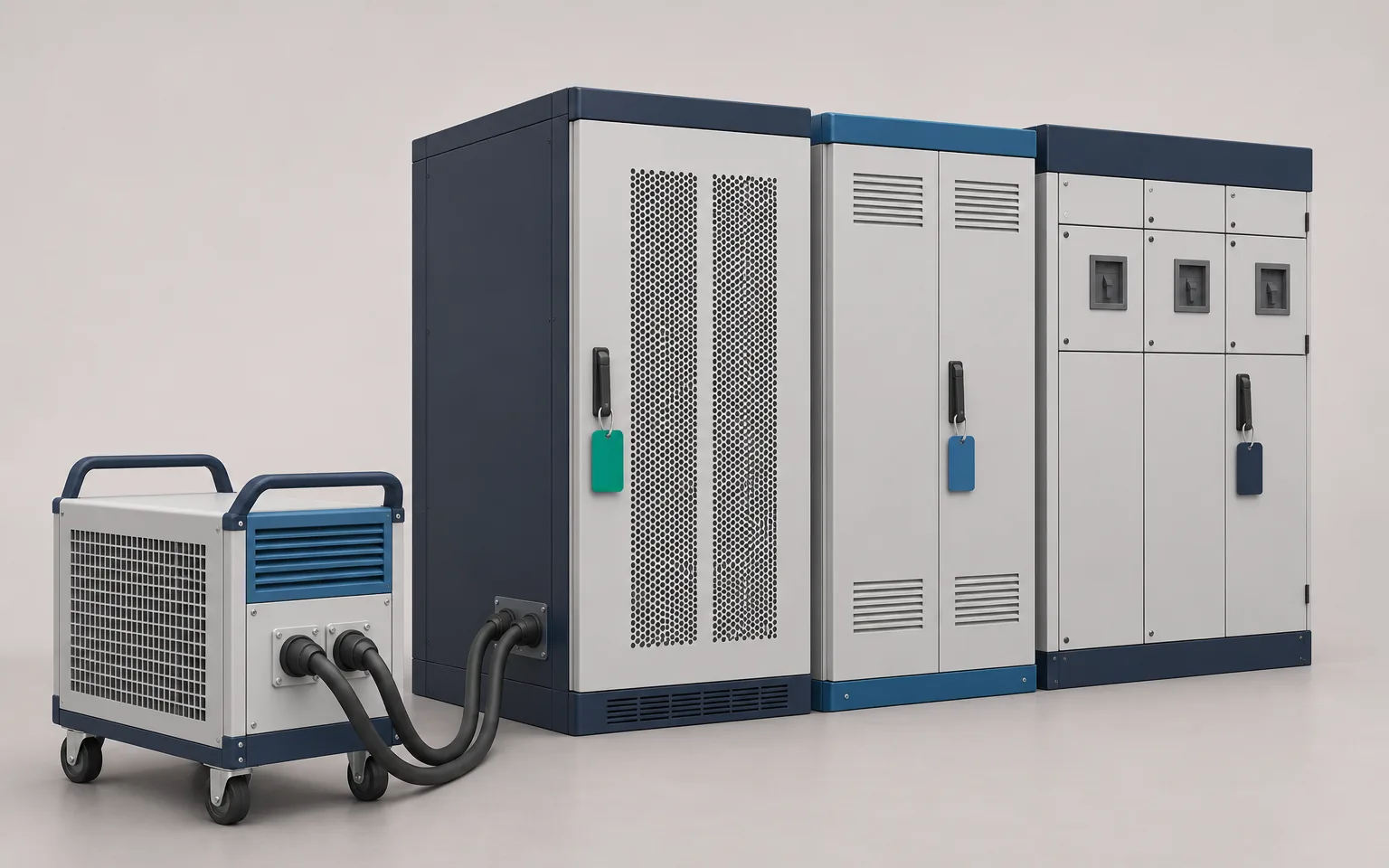
BCxA notes that each piece of equipment can move through Levels 1 to 4 at its own pace, as long as it goes in order. Level 5 starts near the end of construction, once all equipment has finished Level 4. On many sites, a colored tag on each unit shows the last level it passed.
Who does what: CxA, contractors, owner, and operations
The Uptime Institute lists the main stakeholders in commissioning. The table below sums up what each one does.
| Role | Main responsibilities |
|---|---|
| Owner or owner's representative | Starts the process, sets the OPR, accepts the results |
| Commissioning authority (CxA) | Writes the plan and scripts, witnesses tests, runs the issues log |
| Contractors and equipment vendors | Install, start up, and operate the equipment during tests, correct deficiencies |
| Engineer of record | Defines the sequence of operations and confirms the design intent |
| Operations team | Learns the systems and verifies SOPs, MOPs, and EOPs during tests |
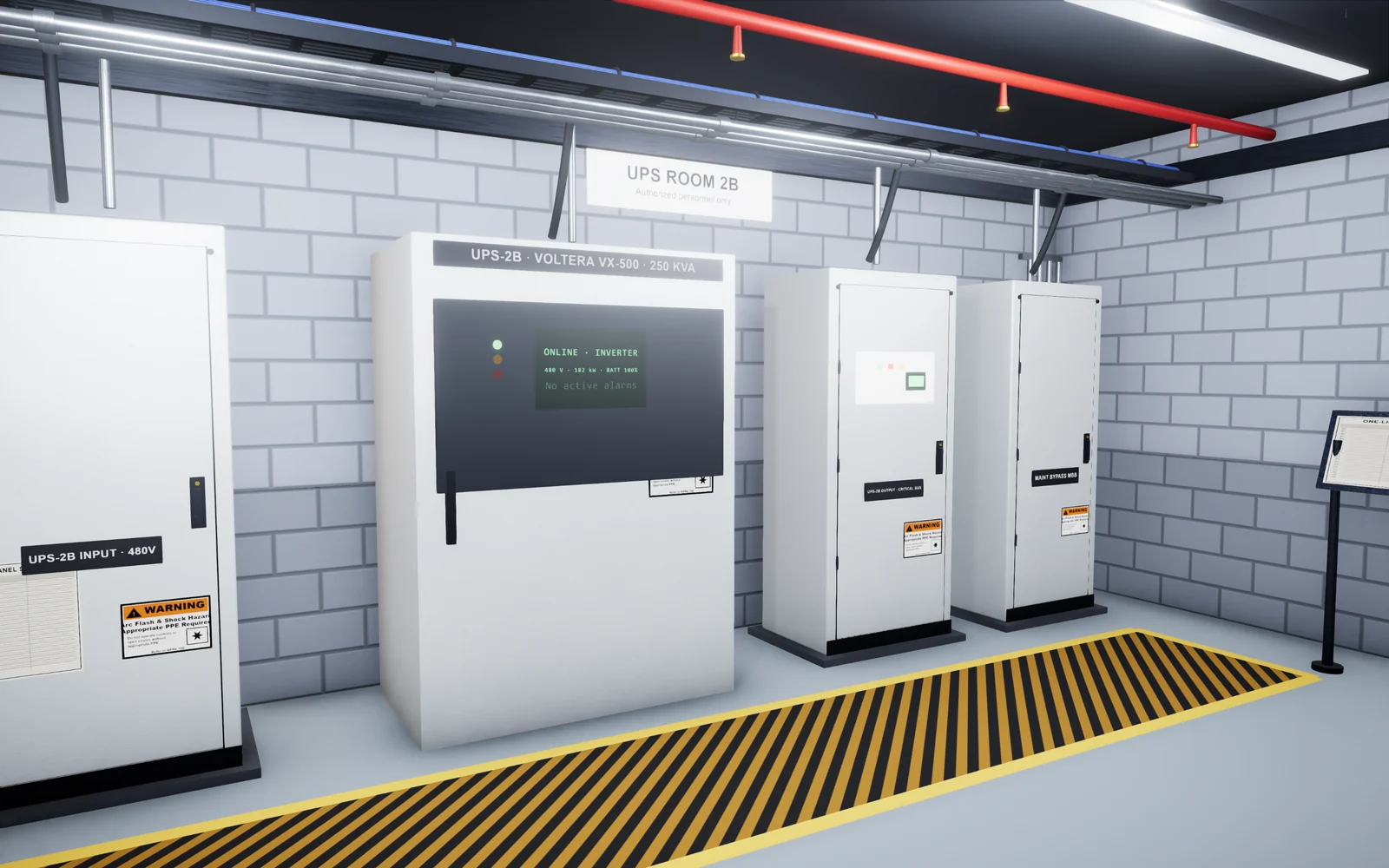
Uptime recommends a CxA contracted directly to the owner and independent of the contractors and designers. It also warns that leaving Operations out of commissioning is a large missed opportunity for training.
Level 1: factory witness testing
Large, long-lead equipment is tested at the manufacturer's plant before it ships, with the owner's team and the CxA watching. This is the cheapest place to fix a defect, since the same repair on site can need a specialist and partial disassembly.
- The witness confirms that ratings, options, and firmware match the approved submittal, that the test follows the agreed procedure, and that the test instruments have current calibration.
- For a UPS, expect load tests on the factory load bank, transfers to battery and to bypass, and alarm checks.
- Switchgear tests cover wiring, interlocks, protective relays, and breaker operation.
- Generators run load tests across the rated range, plus controller and shutdown checks.
Level 2: delivery and installation verification
Level 2 confirms that the equipment arrived without damage and that the crew installed it as designed. Nothing is energized at this stage.
- Compare the delivered unit with the order and with the unit that passed Level 1.
- Look for shipping damage and check any tilt or shock indicators.
- Verify anchorage, clearances, and the working space in front of electrical gear.
- Check terminations and labels against the drawings.
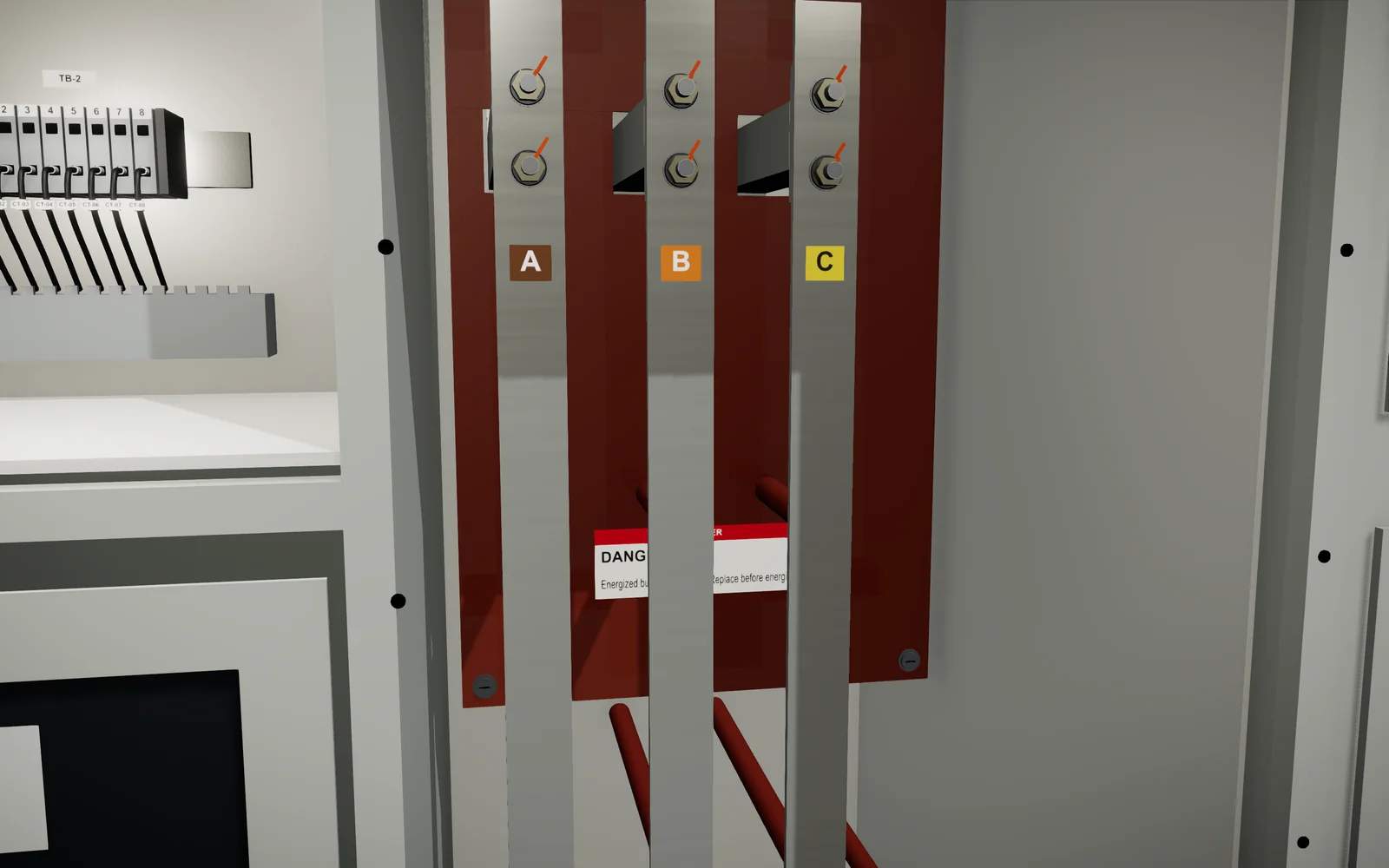
- Bolted connections should be at the specified torque, with the torque marks in place.
Liquid-cooled halls add items to the list. An ASHRAE TC 9.9 technical bulletin on TCS commissioning warns that end caps and protective bags are often damaged in transit. It also points out that a pressure test only verifies leak integrity and leaves any debris in the pipe, so plan a separate flush.
Level 3: start-up and pre-functional testing
At Level 3, each piece of equipment starts and runs on its own for the first time, with vendors following their own start-up procedures. The team checks the controls point by point to confirm that each sensor reads correctly and each command moves the correct device.
Many projects specify the ANSI/NETA ATS standard for electrical equipment. It sets out the field tests and inspections used to judge whether equipment is suitable for initial energization. Typical tests include insulation resistance, contact resistance, breaker trip tests, and protective relay checks. Record every result, since these numbers become the baseline for later maintenance testing.
On the cooling side, Level 3 covers pump rotation, flushing and filling the water loops, valve strokes, and sensor calibration.
Level 4: functional performance testing
Functional performance testing proves that each system performs every function in its sequence of operations, in normal, failure, and maintenance modes, at design load. The IT equipment has not arrived yet, so load banks supply both the electrical load and the heat.
Uptime Institute recommends that Level 4 include load bank tests of the generators, the UPS, and the UPS batteries at design and rated capacities. Its guidance calls for continuous runs of at least eight hours and treats runs of up to 24 hours as best practice.
| System | Sample tests | What the script records |
|---|---|---|
| UPS | Full-load run, module failure under load, transfer to battery, bypass, and maintenance bypass | Output voltage and frequency during transfers, battery runtime, alarms |
| Switchgear | Main-tie-main transfer, local and remote breaker operation, interlocks | Transfer sequence and timing, breaker status at the BMS or EPMS |
| Generators | Start on simulated utility failure, load acceptance, paralleling where used | Time to accept load, voltage and frequency recovery |
| Cooling | Staging, pump or chiller failure, restart after power loss, CDU pump failover | Supply temperature, flow, pressure, recovery time |
Level 5: integrated systems testing
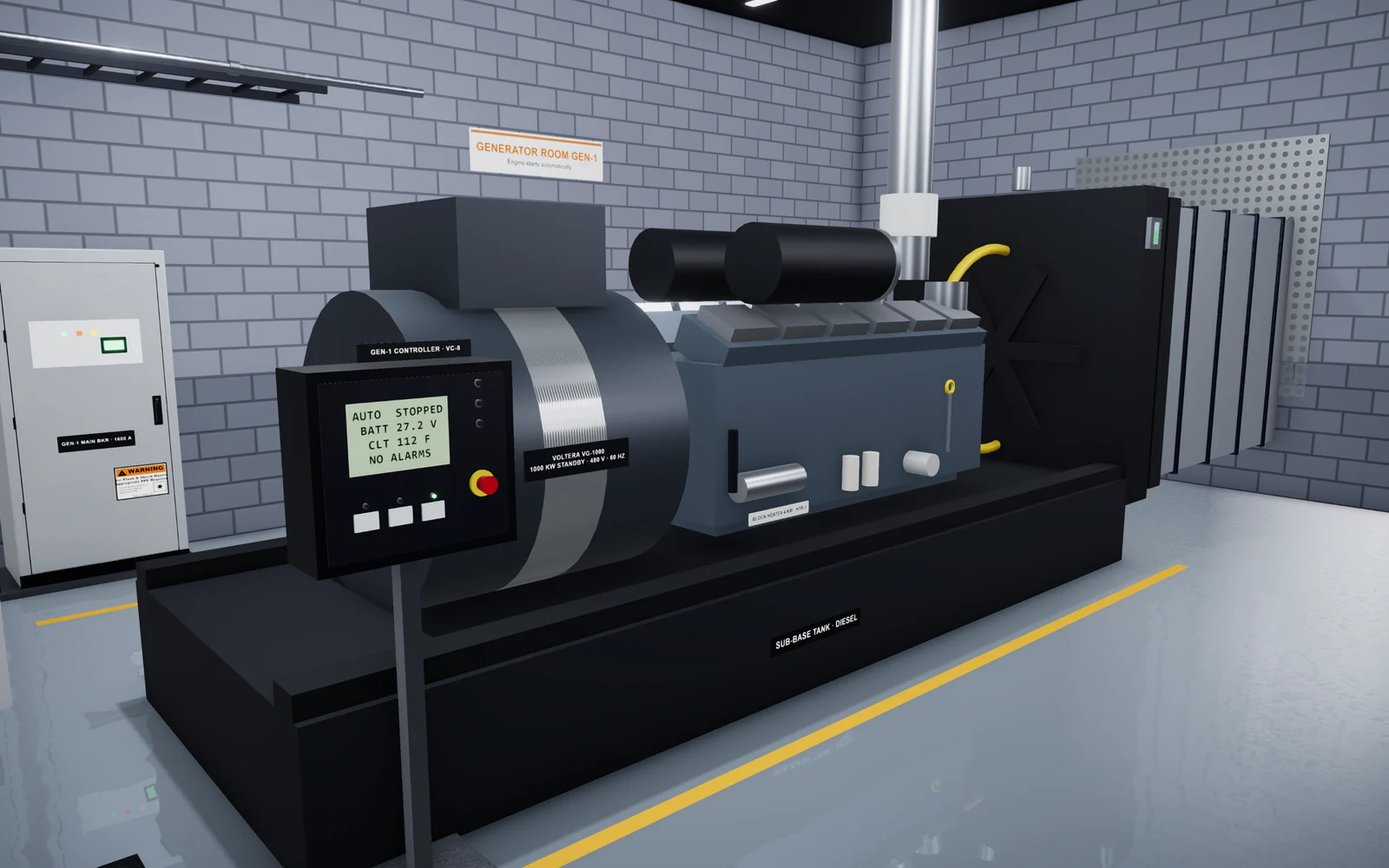
Integrated systems testing (IST) puts the whole facility through realistic failures with all systems live. The classic case is a loss of utility power: the UPS carries the load, the generators start, the switchgear transfers, cooling rides through, and the alarms reach the operators. The team then restores utility power and checks that everything returns to normal.
According to Uptime Institute, a rigorous Level 5 schedule can take up to 20 working days, sometimes longer. Uptime also recommends finishing the BMS graphics before Level 5, spreading small load banks to mimic the real IT layout, and keeping fire detection and suppression active for the tests.
In liquid-cooled halls, the technology cooling system (TCS) belongs in the scenarios too. Confirm that the CDU pumps keep running through the power transfer and that a pump failure brings the standby pump online. Our data center liquid cooling training guide covers what technicians need to know about those loops.
Commissioning documentation: scripts, issue logs, and punch lists
ASHRAE Guideline 0 and Standard 202 describe a commissioning process that starts at project inception and continues through facility operation, with the OPR and the basis of design (BOD) setting what the team must verify. On site, most of the work lives in four documents:
- The commissioning plan sets the scope, schedule, roles, and acceptance criteria for each level. The CxA owns it.
- Test scripts give step-by-step procedures with expected results and sign-off blocks.
- The issues log tracks every deficiency with an owner, a severity, and a status until it is closed.
- A punch list holds the installation items to finish before acceptance.
What a good test script contains
- The purpose, the system boundary, and the prerequisites, including which issues must be closed.
- Safety steps: lockout/tagout points, PPE, and who may operate what.
- Initial conditions: breaker, valve, and controller positions.
- Numbered steps, each with an expected result and a field for the actual result.
- Pass or fail criteria, signatures, and steps to return the system to normal.
Common failure points
The same problems turn up on project after project:
- Delivered firmware, options, or settings that differ from the approved submittal.
- Relay or breaker settings that do not match the coordination study.
- Wiring errors, such as a current transformer with reversed polarity or a control wire on the wrong terminal.
- BMS points mapped to the wrong device, or alarms that never reach the operator.
- Debris from welds or temporary hoses left in a TCS loop.
- Construction running late, so the team cuts Level 5 time.
- An operations team that sees the systems for the first time at handover.
How to train teams for commissioning work
Commissioning calls for skills that technicians rarely use in day-to-day operations. They have to follow a script exactly, set initial conditions, operate equipment while someone witnesses, record results, and stop when a result is wrong.
- Teach the system: one-line diagrams, sequences of operation, and normal states.
- Walk the equipment, or a 3D model of it, and name each component and its normal position.
- Rehearse each script in a simulation before the live test, including the failure modes it tests.
- Assess each person with a practical exercise. Our article on data center technician skills assessment explains how.
- Put operations staff on the Level 4 and Level 5 tests, first as observers and then as operators.
Uptime Institute calls commissioning the best chance for Operations to learn the systems and check procedures with no risk to the IT load. New hires who join after handover miss that window, so build the same scenarios into data center technician onboarding. Our guide to data center training programs covers program design in more detail.
How Oasis helps
We build browser-based 3D simulations of data center equipment and procedures. Each one follows the customer's equipment, procedures, and site standards, and we review the steps and feedback with the customer's team. Construction and commissioning is one of our data center programs.
We can build any commissioning scenario your team needs on your own equipment, from switchgear inspections and UPS and generator functional tests to cooling faults or a full integrated systems test script. The examples on this site show only part of that work. Teams can rehearse a script in a web browser, with no headset, before they stand in front of live equipment. Our comparison of VR and browser simulation training explains the trade-offs.
You can try a data center simulation in your browser now. To talk through a commissioning training program, book a 15-minute call.
Frequently asked questions
What are the 5 levels of commissioning in a data center?
Level 1 is factory witness testing at the manufacturer's plant. Level 2 checks delivery and installation, and Level 3 covers start-up and pre-functional testing. Level 4 is functional performance testing of each system, and Level 5 is integrated systems testing of the whole facility.
What is the difference between Level 4 and Level 5 commissioning?
Level 4 tests one system at a time, such as the UPS, through all of its modes and failures. Level 5 tests all the systems together. A typical Level 5 test cuts utility power and checks that power, cooling, controls, and alarms respond the way the design intends.
Who performs data center commissioning?
The commissioning authority (CxA) plans the work, writes the scripts, witnesses the tests, and keeps the issues log. Contractors and vendors operate the equipment, and the owner accepts the results. The operations team should also take part in Levels 4 and 5.
How long does integrated systems testing take?
That depends on the size and complexity of the facility. Uptime Institute notes that a rigorous Level 5 program can take up to 20 working days, sometimes longer, so put the full duration on the project schedule from the start.
How do you prepare technicians for commissioning work?
Start with the one-line diagrams and sequences of operation. Then let technicians rehearse each test script, including its failure modes, in a simulation. Assess them with practical exercises, and put them on live Level 4 and Level 5 tests under supervision.
Sources
- Commissioning Levels Are Not the Commissioning Process, Building Commissioning Association (BCxA)
- Improve Project Success Through Mission Critical Commissioning, Uptime Institute Journal
- Effectively Applying the Commissioning Process (ASHRAE Guideline 0 and Standard 202), ASHRAE
- ANSI/NETA ATS: Standard for Acceptance Testing Specifications for Electrical Power Equipment and Systems, InterNational Electrical Testing Association (NETA)
- TCS Commissioning: Bringing a New Liquid Cooling System Online (Technical Bulletin), ASHRAE TC 9.9
Related articles
 10 min read
Data Center Liquid Cooling Training: What Technicians Must Learn for AI Racks
What technicians must know to work on liquid-cooled AI racks, from CDUs and quick disconnects to leak response and pump failover, and how to train for it.Read guide 9 min read
Data Center Technician Skills Assessment: How to Test Practical Skills Before You Hire
Which tasks to test in data center technician candidates, how written, hands-on, and simulation exercises compare, how to score each candidate fairly, and the legal basics.Read guide 10 min read
Data Center Training Programs: The Best Certifications and Courses for 2026
The data center training programs and certifications we recommend for 2026, with the audience, format, content, and official link for each. We also cover how to choose one and how certifications differ from site-specific training.Read guide