Interplay Learning Alternatives: Simulation Training Options for Data Center Technicians, Compared
An honest comparison of Interplay Learning, BILT, Oasis, ITC Learning, Transfr, and CNet Training for data center teams: format, catalog or custom content, data center coverage, and where each one is strongest.
 By Shreshth Saride, Co-founder and CEO12 min read

TL;DR
- Interplay Learning is a ready-made catalog of skilled trades courses and 3D simulations, with a data center maintenance track, that runs on computers, phones, tablets, and VR headsets.
- The main question for a data center team is catalog or custom: a catalog teaches general equipment and fundamentals, while custom content is built around your own equipment and procedures.
- BILT builds custom 3D step-by-step instructions from your CAD and SOPs for phones, tablets, and headsets. Oasis builds custom browser-based 3D simulations of your equipment, SOPs, MOPs, and fault scenarios.
- ITC Learning is an online course library with data center pathways built on trades fundamentals, and Transfr is VR headset training for career pathways. CNet Training is an instructor-led, data center specific certification, not a simulation.
- Many teams combine one of each: a catalog or certification for fundamentals, and site-specific practice for the procedures that carry the most risk.
What should you compare when looking at Interplay Learning alternatives?
Compare five things: the format (VR, browser, mobile app, video, or instructor), whether the content is a ready-made catalog or built for your equipment, how much of it covers data center systems, whether learners practice or only read and watch, and how results are reported. Price and contract terms matter too, but most of these vendors do not publish prices for business plans, so you will get those in a sales call.
The catalog or custom question decides most of the rest. A catalog is available on day one and covers general skills, such as chiller or VFD troubleshooting. Custom content takes time to build but matches the UPS lineup, switchgear, and MOPs your technicians will actually work with.
Interplay Learning: a catalog of trades courses and 3D simulations
Interplay Learning is a skilled trades training platform that combines short video courses, 3D simulations, and knowledge checks. Its How It Works page describes "a growing catalog of courses, 3D simulations and a comprehensive suite of measurement and engagement tools," with video lessons that "rarely run more than 3-5 minutes long."
Its 3D simulations run in three modes: Training Mode guides learners step by step, Challenge Mode adds "a randomly generated fault in the system" with some guidance removed, and Assessment Mode gives no guidance at all. Learning paths put courses in order, and the same page says training can be completed "via computer, mobile device, tablet or with a virtual reality headset."
Data center coverage
Interplay has a data center maintenance training page that lists featured courses including Data Center Introduction, Data Center Power Infrastructure, Chiller Troubleshooting, Basic PLC Troubleshooting, VFD Maintenance, and CRAC Unit Troubleshooting. The page says its assessments and reporting help managers find skill gaps and standardize training "across teams, shifts, and locations."
Where it is strongest
- Breadth, ready now. A catalog across HVAC, electrical, plumbing, facilities maintenance, and safety, plus a data center track, with nothing to build first.
- Device choice. Computer, phone, tablet, or VR headset, and a mobile app for training between jobs.
- Troubleshooting practice on common equipment. The randomized faults in Challenge Mode suit general diagnostic skills, such as chiller or CRAC troubleshooting.
- Certification prep. Its homepage lists preparation for exams such as EPA 608, OSHA 10, and NATE.
What to ask: the pages we read describe a catalog. They do not describe building a simulation of a specific site's equipment or procedures, so if you need that, ask Interplay directly what is possible.
BILT: custom 3D work instructions built from your CAD and SOPs
BILT turns equipment procedures into interactive 3D step-by-step instructions that technicians follow on a phone, tablet, or headset. Its data center page says the instructions are "built from CAD and existing SOPs," and that technicians "can rotate, zoom, and inspect assemblies before performing work."
The content is custom. BILT's process is to review your existing instructions, CAD, equipment, and support data; have its design experts produce the 3D instructions; and publish them once you approve them. The same instruction serves training, on-site work, and remote support.
Format and devices
According to BILT's platform page, instructions reach people through the BILT mobile app, QR codes, "an AR headset in the classroom," web embeds, and an SDK and API, with apps for iOS, Android, Windows, and Apple Vision Pro. Its data center FAQ says technicians need no special hardware beyond standard mobile devices and tablets, and that offline-capable configurations are available.
Where it is strongest
- Guidance at the point of work. The instruction a new hire trains on is the one they open in front of the equipment.
- Headset option. BILT's FAQ says the same instruction runs on phones, tablets, and headsets such as Apple Vision Pro, so you can choose the level of immersion.
- OEM and contractor reach. Its data center page says BILT helps standardize execution across internal teams, contractors, and service partners.
Its data center FAQ is also clear about scope: "BILT focuses on procedural clarity and task execution, not advanced diagnostics or system monitoring." If you need technicians to practice diagnosing a fault, check how far branching instructions go for your use case.
Oasis Simulations: custom browser simulations of your own equipment
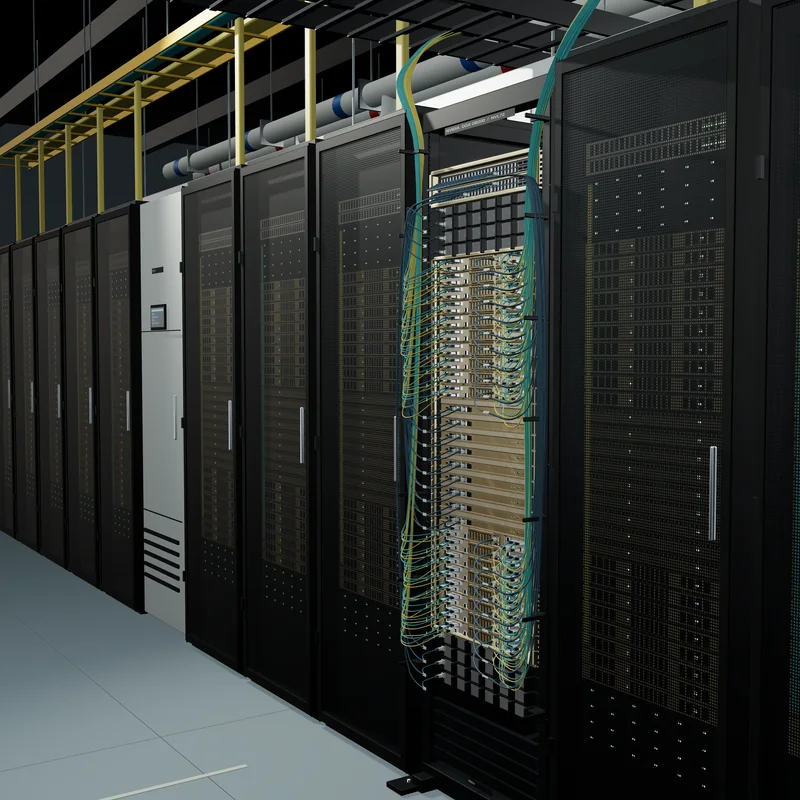
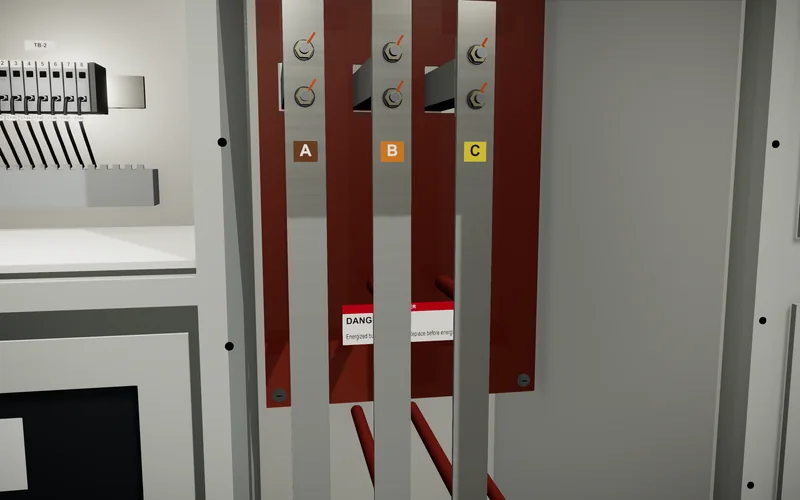
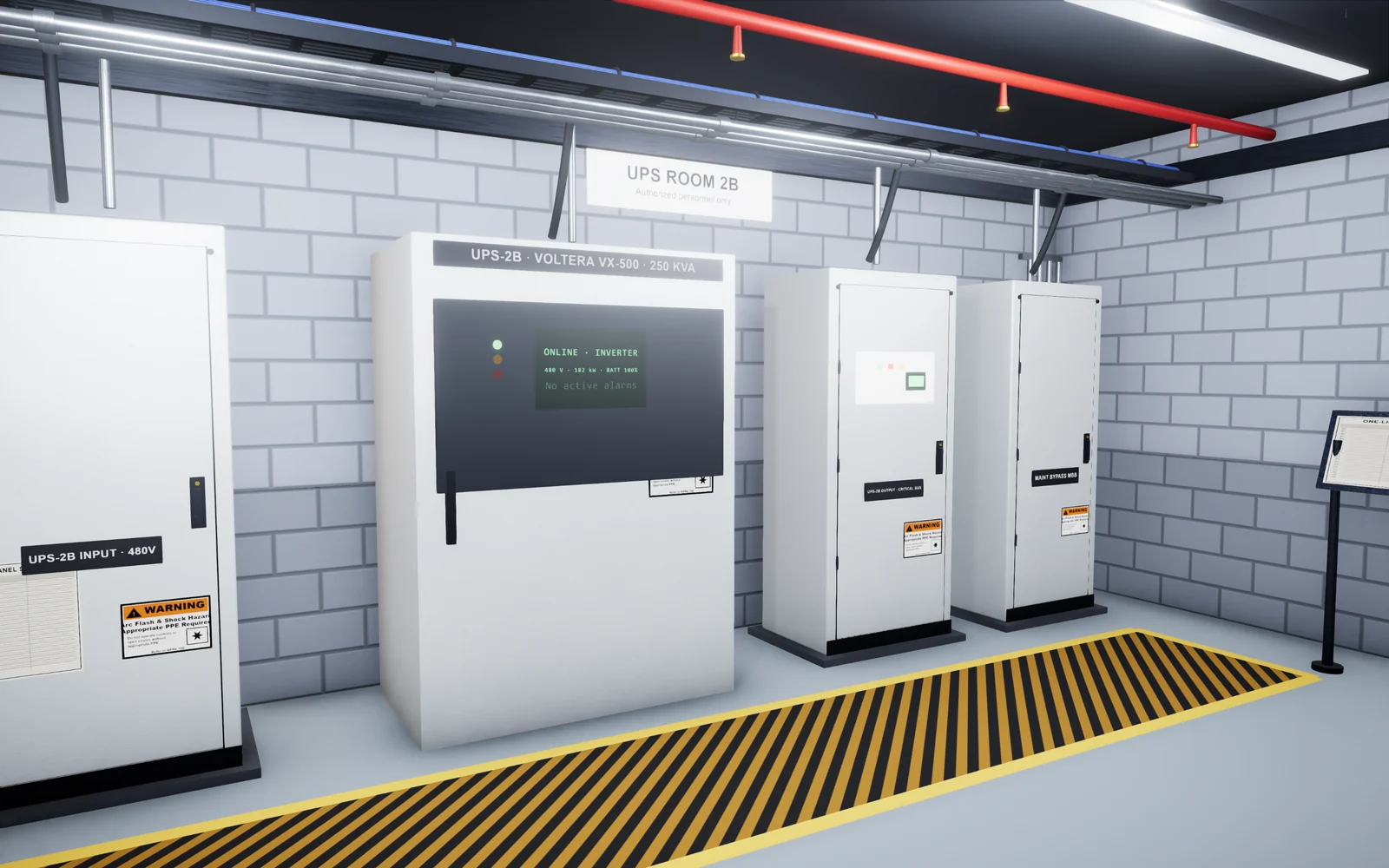
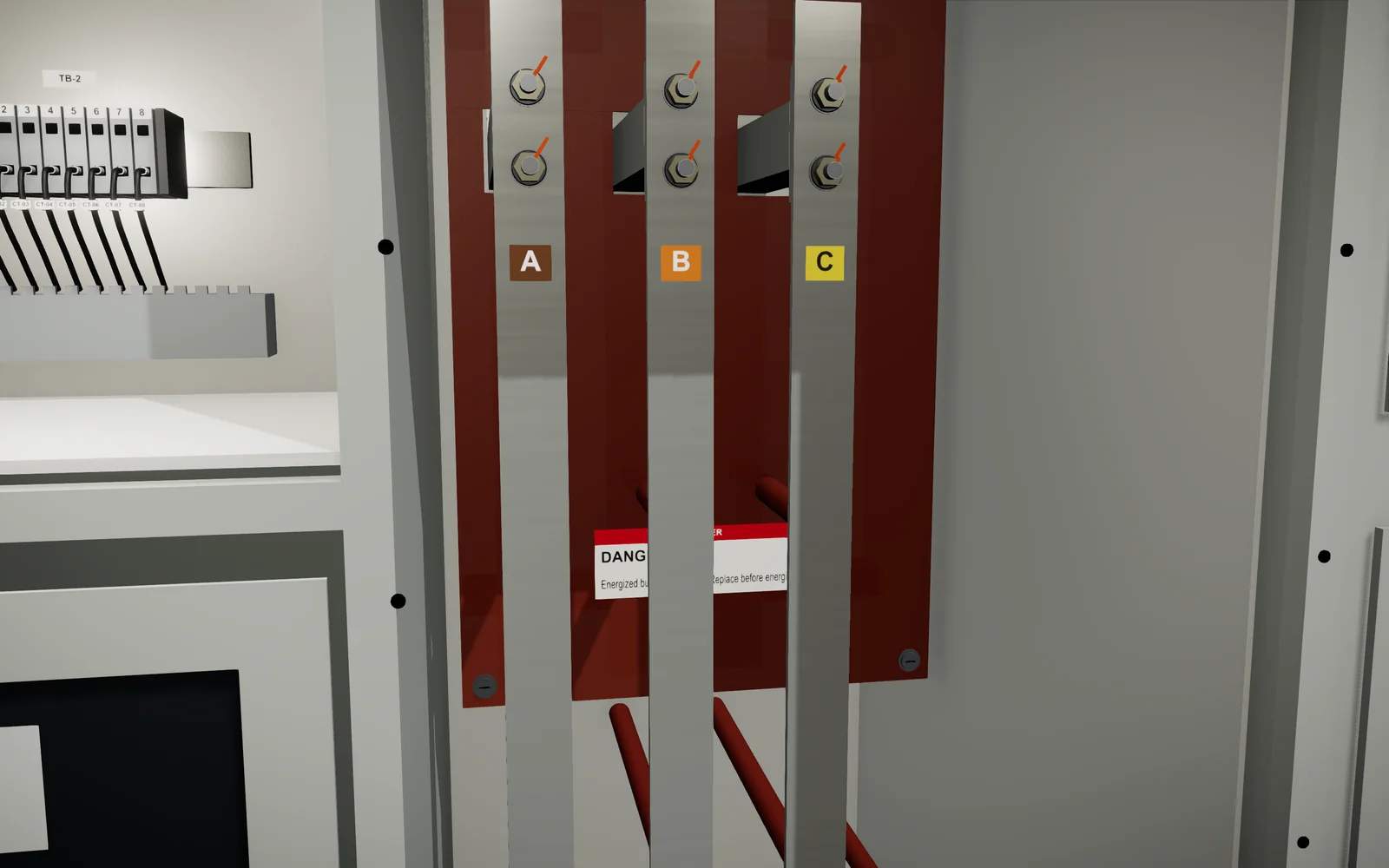
Oasis Simulations builds custom 3D simulations of a team's own equipment, SOPs, MOPs, and fault scenarios that run in a web browser, with no VR headset. Learners practice the procedure on a model of the equipment they will work on, not a generic version of it.
Data center teams use these simulations for hiring exercises that support interviews, onboarding and training, commissioning practice, and operations and maintenance practice. Oasis also builds custom skilled trades simulation training programs for work outside the data center. The company is backed by Y Combinator and Pareto.
Where it is strongest
- Your equipment and your procedures. Scenarios follow your own MOPs and EOPs, including faults you cannot safely create on live equipment.
- Nothing to install. A browser link works for remote candidates in a hiring process and for new hires before their first site visit. Our VR vs browser comparison covers the trade-offs of each format.
- Hiring and training from the same scenarios. An exercise used to support an interview can become practice material after the hire.
Where others are stronger
Oasis does not offer a ready-made course catalog: the scenes on this site are examples, and each program is built for a team. If you need broad fundamentals across many trades today, a catalog such as Interplay or ITC Learning is faster to start. If you want a headset or AR option, Interplay, BILT, and Transfr offer one and Oasis does not.
ITC Learning: an online library of industrial maintenance courses
ITC Learning offers online industrial maintenance courses, skills assessments, and learning paths for skilled trades teams. Its homepage groups courses into mechanical, electrical, instrumentation, foundational skills, and emerging technologies, and says most courses take 35 to 45 minutes and are self-paced.
Each course includes a skills assessment of about 20 questions. Courses are SCORM-compliant, so they can run in your own learning management system or in ITC's hosted portal, and many are available in Spanish. Its data center training page pairs data center courses with that electrical, mechanical, HVAC, controls, and safety coursework, in pathways for workforce entry, technician specialization, and critical facilities development.
Where it is strongest: foundational electrical, mechanical, and instrumentation knowledge, delivered through an LMS you already run, with a quick knowledge check after each course.
Transfr: VR skills training for career pathways
Transfr is a VR training provider focused on career preparation and pre-employment programs. Its Transfr Train page describes VR simulations with a digital coach, a fundamental skills program on topics such as workplace safety and math and measurement, and structured 20-hour pre-employment programs that combine VR training with digital lessons.
The simulations run on managed VR headsets, and the page says they cannot be accessed through an LMS. The industries it lists are diesel technology, aviation maintenance, electrical construction, hospitality and tourism, manufacturing, construction, automotive, and health sciences. Data centers are not on that list.
Where it is strongest: building an entry-level pipeline with schools and workforce programs, where learners need safety and trade fundamentals before they specialize.
CNet Training: instructor-led data center technician certification
CNet Training is not a simulation platform. It is a data center education provider, and its Certified Data Centre Technician Professional (CDCTP) program is a five-day course for people already working in mission critical facilities. The page says experience of working within a data center environment is essential.
The syllabus covers power, cooling (including liquid cooling), IT connectivity, space, safety, operational procedures, change management, and maintenance strategies, with case studies throughout. Remote learners need a laptop with a webcam and microphone. Certification must be renewed every three years.
Where it is strongest: a recognized, data center specific credential and broad systems knowledge for technicians who already have site experience. Our review of data center training programs compares it with other certifications.
Interplay Learning competitors compared side by side
The table below sums up each option from its own pages. The biggest split is between catalogs (Interplay, ITC Learning, Transfr), custom builds (BILT, Oasis), and certification (CNet Training).
| Option | Format | Catalog or custom | Data center coverage | Strongest for |
|---|---|---|---|---|
| Interplay Learning | Video courses, 3D simulations, knowledge checks; computer, mobile, tablet, or VR headset | Catalog | Data center maintenance track (power, chillers, CRAC, VFD, PLC) | Broad trades fundamentals and general troubleshooting practice, ready now |
| BILT | Interactive 3D step-by-step instructions; phone, tablet, web, Apple Vision Pro and AR headset | Custom, built from your CAD and SOPs | Data center page for operations and maintenance procedures | Procedure guidance used in training and at the point of work |
| Oasis Simulations | Browser-based 3D simulation; no headset | Custom, built around your equipment, SOPs, MOPs, and faults | Data center hiring, onboarding, commissioning, and O&M practice | Practicing your own procedures and faults, and hiring exercises that support interviews |
| ITC Learning | Online self-paced courses with assessments; SCORM for your LMS | Catalog | Data center pathways built on general trades courses | Electrical, mechanical, and instrumentation fundamentals |
| Transfr | VR simulations on managed headsets with a digital coach | Catalog | Data centers not among its listed industries | Pre-employment and career pathway programs |
| CNet Training (CDCTP) | Five-day instructor-led course; remote attendance available | Fixed syllabus | Data center specific | A recognized credential and broad systems knowledge |
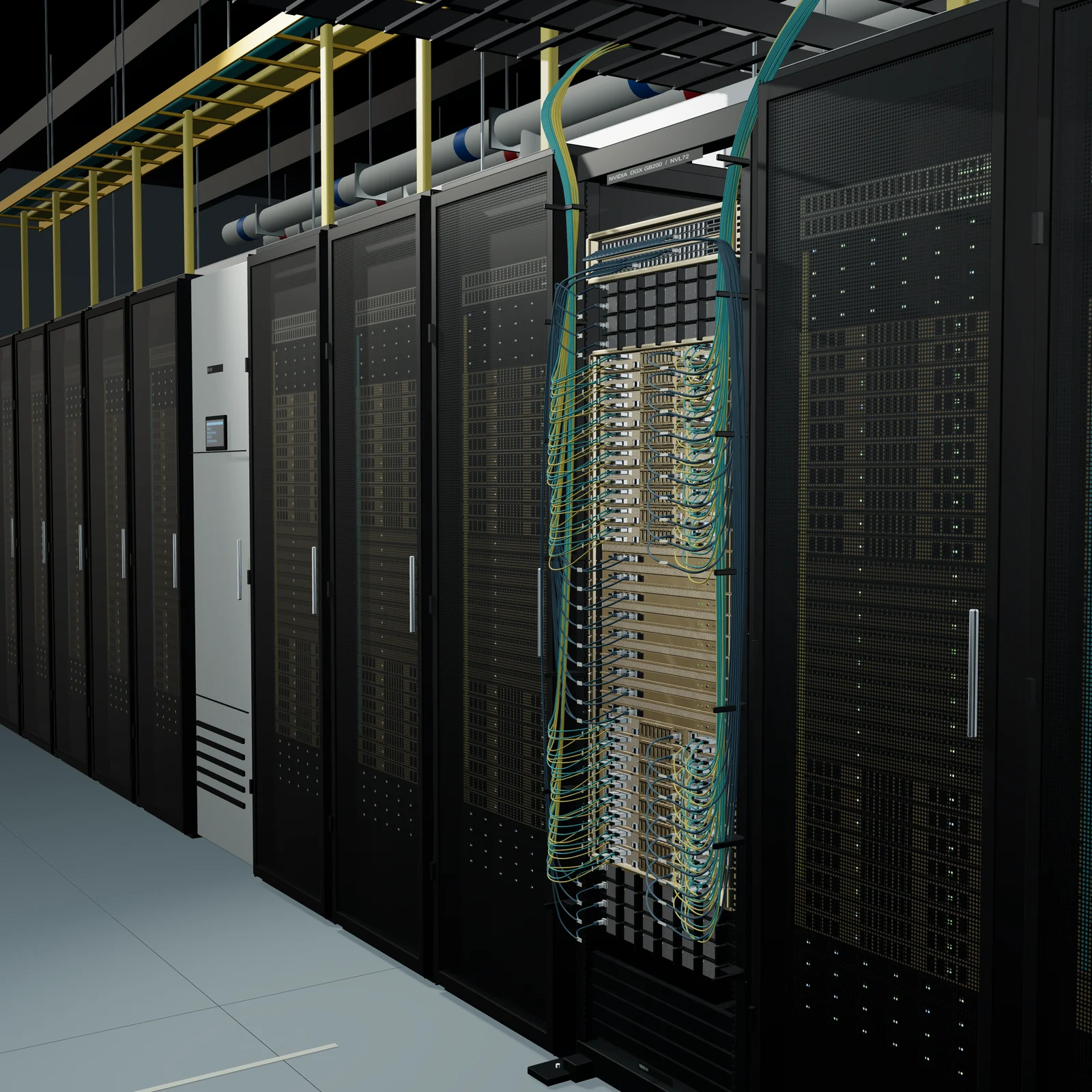
How to choose data center technician training software
Start from the job, not the tool. List the tasks your technicians must do, mark which ones are general skills and which ones depend on your equipment and procedures, and then match each group to a format.
- General fundamentals (electrical basics, HVAC, safety awareness): a catalog such as Interplay or ITC Learning is usually the fastest route.
- A recognized credential for experienced staff: an instructor-led certification such as CNet's CDCTP. Our training programs review lists the common options.
- Site-specific procedures (your MOPs, EOPs, switching sequences, and alarm response): custom content, as 3D instructions (BILT) or as simulation practice with faults (Oasis).
- Hiring: a practical exercise that every candidate takes the same way. See our skills assessment guide for how to score it. Exercises support interviews; they do not predict job performance on their own.
- Onboarding: put the taught skills into a 30/60/90 plan, as in our technician onboarding guide, and attach a resource to each one.
Vendor evaluation checklist (copy this)
- [ ] Which formats does it run on (browser, app, VR or AR headset, instructor), and what hardware must we buy or ship?
- [ ] Is the content a catalog, custom-built, or both? If custom, what do you need from us (CAD, SOPs, MOPs, photos, site walks)?
- [ ] Which data center systems does it cover today: power chain, UPS, generators, switchgear, cooling, liquid cooling, IT hardware?
- [ ] Do learners practice and make decisions, or mainly read and watch? Can it include faults and abnormal conditions?
- [ ] How are results reported, and can it run in our LMS (SCORM or another integration)?
- [ ] Can remote candidates or new hires use it before they reach the site?
- [ ] How are updates handled when equipment or procedures change, and who makes them?
- [ ] What are the pricing model and contract terms? (Ask for them in writing.)
Should you use more than one of these tools?
Often, yes. These options cover different layers of training, so a data center team can use a catalog or certification for fundamentals and custom practice for the site's own procedures without paying twice for the same thing.
A common pattern is a certification or course library for systems knowledge, then hands-on practice for the procedures where a mistake causes an outage or an injury: switching, UPS bypass, generator tests, and alarm response. Physical skills, such as torque, cable dressing, and lifting, still need supervised practice on real equipment whichever software you choose.
How Oasis helps
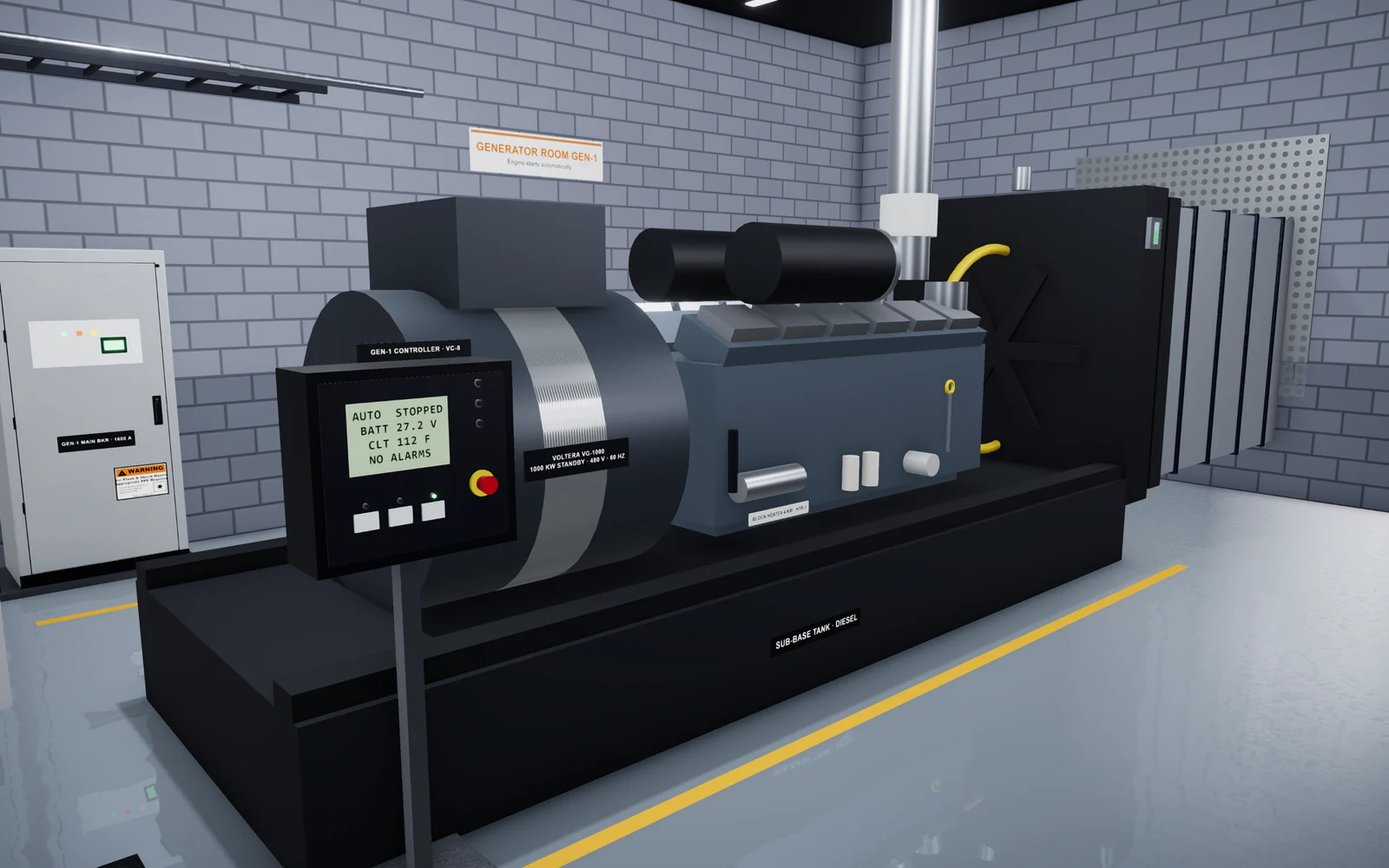
Oasis Simulations builds custom 3D simulations of data center equipment and procedures that run in a web browser. We build each scenario around your equipment, your SOPs and MOPs, and the faults you want people to practice, for hiring exercises, onboarding and training, commissioning practice, and operations and maintenance.
The scenes on this site are examples, not a fixed catalog. You can try a data center simulation in your browser, read about our programs, or see how we build a program. To talk it through, book a 15-minute call.
Frequently asked questions
What are the main alternatives to Interplay Learning for data center teams?
For custom content, BILT builds 3D step-by-step instructions from your CAD and SOPs, and Oasis Simulations builds browser-based simulations of your equipment and procedures. For catalogs, ITC Learning offers online industrial maintenance courses and Transfr offers VR trades training. For a data center credential, CNet Training runs the instructor-led CDCTP program.
Does Interplay Learning offer data center technician training?
Yes. Interplay's data center maintenance training page lists courses including Data Center Introduction, Data Center Power Infrastructure, Chiller Troubleshooting, Basic PLC Troubleshooting, VFD Maintenance, and CRAC Unit Troubleshooting, along with assessments and reporting.
Do I need VR headsets for simulation-based technician training?
No. Interplay runs on computers, phones, and tablets as well as VR headsets, BILT runs on phones and tablets with a headset option, and Oasis runs in a web browser with no headset. Transfr Train is the option here built around VR headsets.
What is the difference between a training catalog and a custom simulation?
A catalog is ready-made content about general equipment and skills that you can assign right away. A custom simulation or instruction is built around your own equipment, procedures, and faults, so it takes time to build but matches what technicians will do on site.
Can simulation training replace a data center certification?
No. A certification such as CNet's CDCTP teaches broad systems knowledge and gives a recognized credential. Simulation practice is for rehearsing specific procedures. Most teams use them for different purposes and often use both.
Can simulation exercises be used in hiring?
Yes, to support interviews. A simulation gives every candidate the same practical task to discuss. Treat the result as one observed sample alongside interviews and references, not as a validated prediction of job performance.
Sources
- Data Center Maintenance Training, Interplay Learning
- How Our Training Works, Interplay Learning
- Data Centers, BILT
- Frequently Asked Questions, BILT
- Certified Data Centre Technician Professional (CDCTP), CNet Training
Related articles
- Comparisons
VR vs Browser-Based Simulation Training: A Fair Comparison for Trades and Data Center Teams
How VR headset training and browser-based 3D simulation compare on hardware, cost, remote candidates, realism, simulator sickness, accessibility, updates, and reporting, and where each one fits best. - Training
Data Center Training Programs: The Best Certifications and Courses for 2026
The data center training programs and certifications we recommend for 2026, with the audience, format, content, and official link for each. We also cover how to choose one and how certifications differ from site-specific training. - Hiring
Data Center Technician Skills Assessment: How to Test Practical Skills Before You Hire
Which tasks to test in data center technician candidates, how written, hands-on, and simulation exercises compare, how to score each candidate fairly, and the legal basics.